

We love stories.
So when writing a story – not just telling an anecdote or a gratuitous lie – it’s important to really know stories. To know what people respond to and what you really want to say.
So I’ve been researching mythical beings – as mentioned in excruciating detail in this last post.
It’s really quite difficult to come up with your own spin on mythologies that are so established and permeated through time. You end up reading about magicks and beings and religions that have true stories. Crazy, beautiful, timeless stories – some with morals; some without. Stories that don’t feel real at all but do feel grand.
When constructing your own story things tend to get in the way. You start to concern yourself with current affairs and adult vanity attempts to usurp childhood woes. You start wanting to talk about something political or desiring “character depth” and all these banal terms and structures that do need to be addressed but ultimately overwhelm you.
At times I wish I was more able to flick a switch and let the story ignite, without the inner critics bad breath whispering all my wrongs at me.
Because all that happens is that I end up feeling… inadequate.
But it gets better. In my research, I came across the Allocamelus. Also known as the Ass Camel.
So it’s the 17th century and heraldry needs an animal. Preferably a mystical one. Something with the head of a donkey and the body of a camel. Now understood to be the legendary representation of the llama, the Allocamelus had a popular stint as the pretty face on the crest of the English Eastland Company. Edward Topsell’s The History of Four-footed Beasts and Serpents believed that when a camel and mule really loved each other… Allocamelus was born.
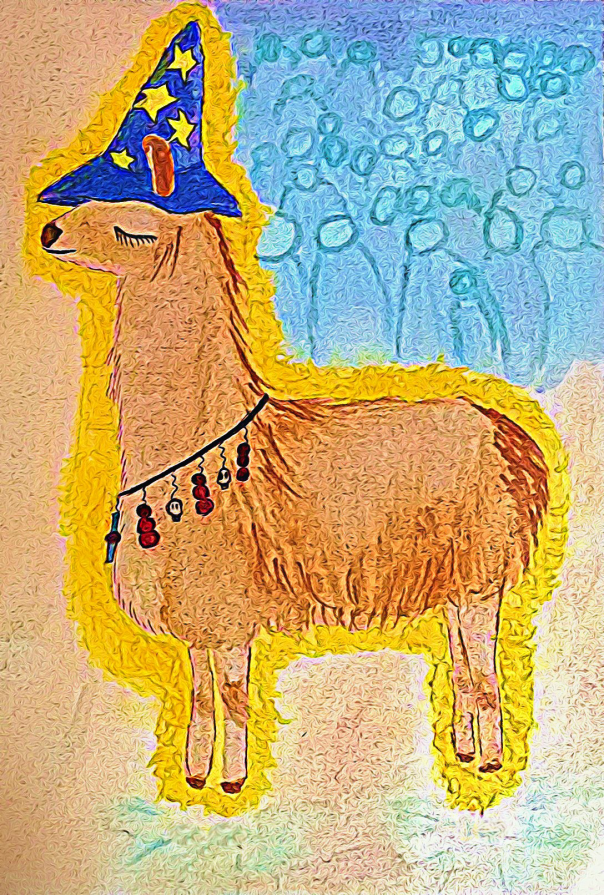
Twice the height of a man and just as stubborn. Any attempts to quash its birthright to wilfulness meant it would conspire against you. Like – it would spit at you – evilly. On the plus side if it liked you it would do you favours because why not. It’s better than getting munched on by donkey teeth.
Please take all this with as much salt as possible without tasting your own death.
But suddenly I felt calmer. Those medieval folk – they saw a thing and made it their own. The llama was just being a llama. And the rest of us got a mildly amusing bit of dinner conversation.
The truth is that there is no purpose to trying to find additional meaning in your own work. It’s the writer’s equivalent of a dog chasing it’s tail. The point is to let other people chase your tai – no wait. The point is that the meaning one finds in their work is to produce it. The metaphors, social commentary and depth of meaning of the actual product is best left to the audience.
If society can find mysticism in a llama I think I’ll be fine.
So no more pointless second-guessing.
I drew you a magical floating llama.

Join my mailing list to get email notifications of new posts.
By clicking submit, you agree to share your email address with the me and Mailchimp to receive marketing, updates, and other emails from the The Lazy Slinky. Use the unsubscribe link in those emails to opt out at any time
My latest posts
-

Going Full Circle: on the virtues of the sloth
Ladies and Gentlemen, I have gone full circle. This process took 11 months, give or take however many days it took me to put this post together… The employment that served as an excuse for the rarity of my posts has now been terminated. On my terms I assure you. But the process of one… Read more
-

Travel disasters: on being more adult
Happy New Year Readers! (clock check – 23:26 – still have time for the customary New Years Post!) In the ongoing battle to recognise my self-proclaimed quirks for the limiting flaws that they are, I continue to go through the traditional cycles of high octane, adrenaline pumping giddiness and systematic self-loathing. Yet I know, ultimately,… Read more
-

The philosophy of the toilet: on my lack of words
Empathetic Reader, see if you can spot the alliteration. I have been reading up on rhetoric. The Gods of the Blog are punishing me. As I sit here, teary-eyed and, quite frankly, flabbergasted, I feel the welcome rush of deja vu. For you see, lovely reader, I spent the last 2 hours perfecting a 600… Read more
-

Praise affects: the “call me dumb” paradox
It’s quite astounding how a sense of purpose dissipates the moment you realise you’ve reached the zenith of your productivity and rather felt there was more on offer. Read more
-

The Economics of Adulthood: It essentially sucks
Active reader, humans are designed to move. We’ve set up this reality for ourselves in which the only people who run are those who do it professionally or those that overslept on a Monday morning. Also children. For these aren’t hunter-gatherer times you savage and we have comfy chairs and laptops and bedsores. Where have… Read more
-

Tourism again: what I learned
I constantly attempt to escape the wisdom of others. This is because I am up my own arse. Prior to getting on the plane to sunny Spain I was given many pearls of wisdom by Mother, beloved Aunt and a plethora of seasoned travellers. I subsequently made it my life’s goal to prove every one… Read more

